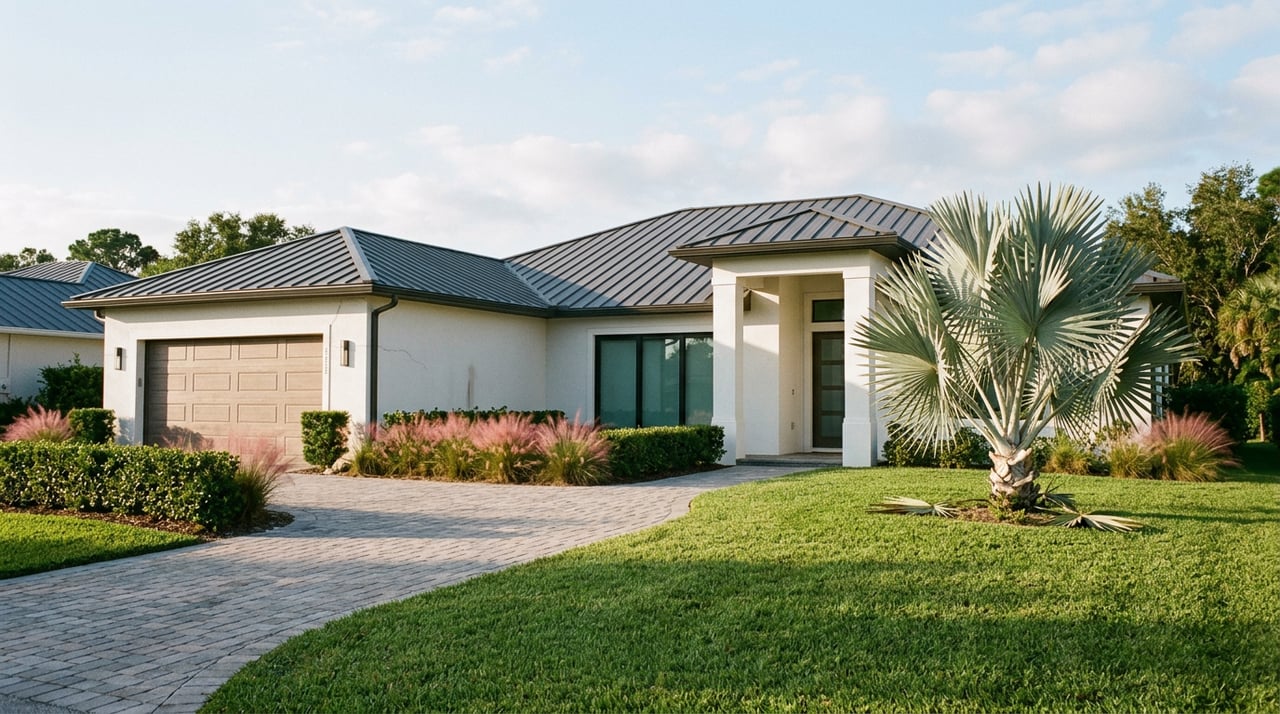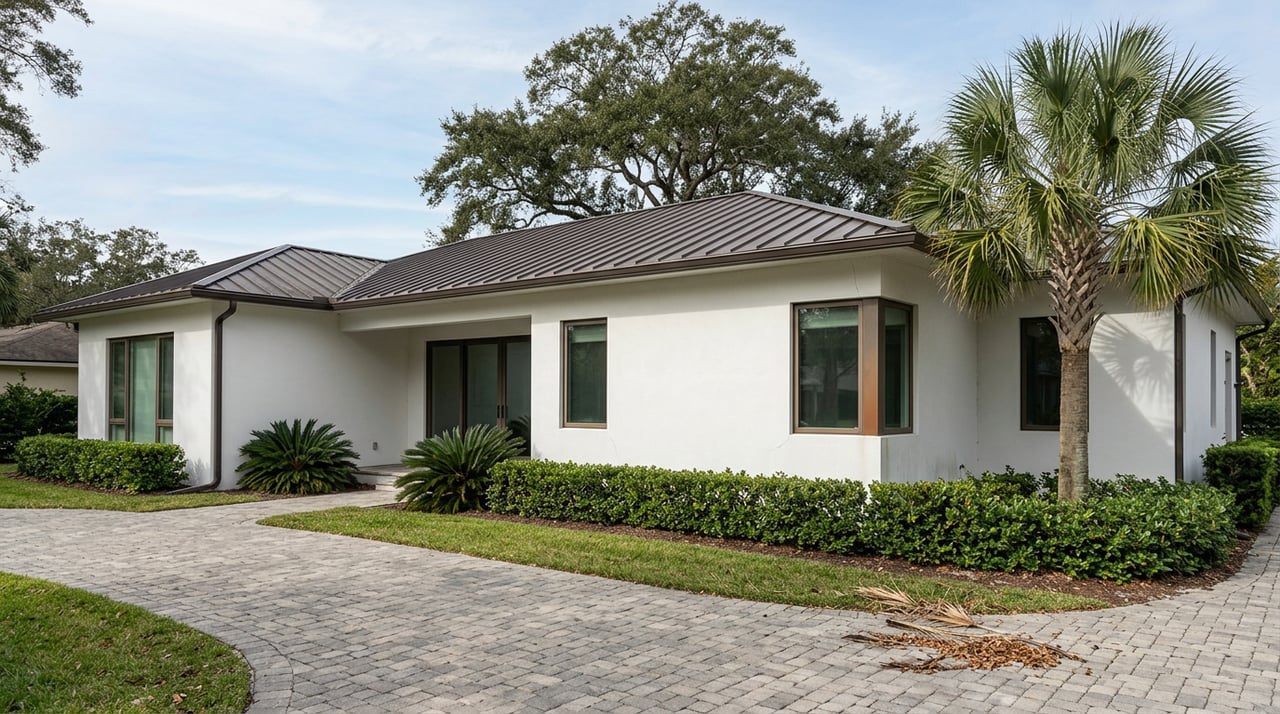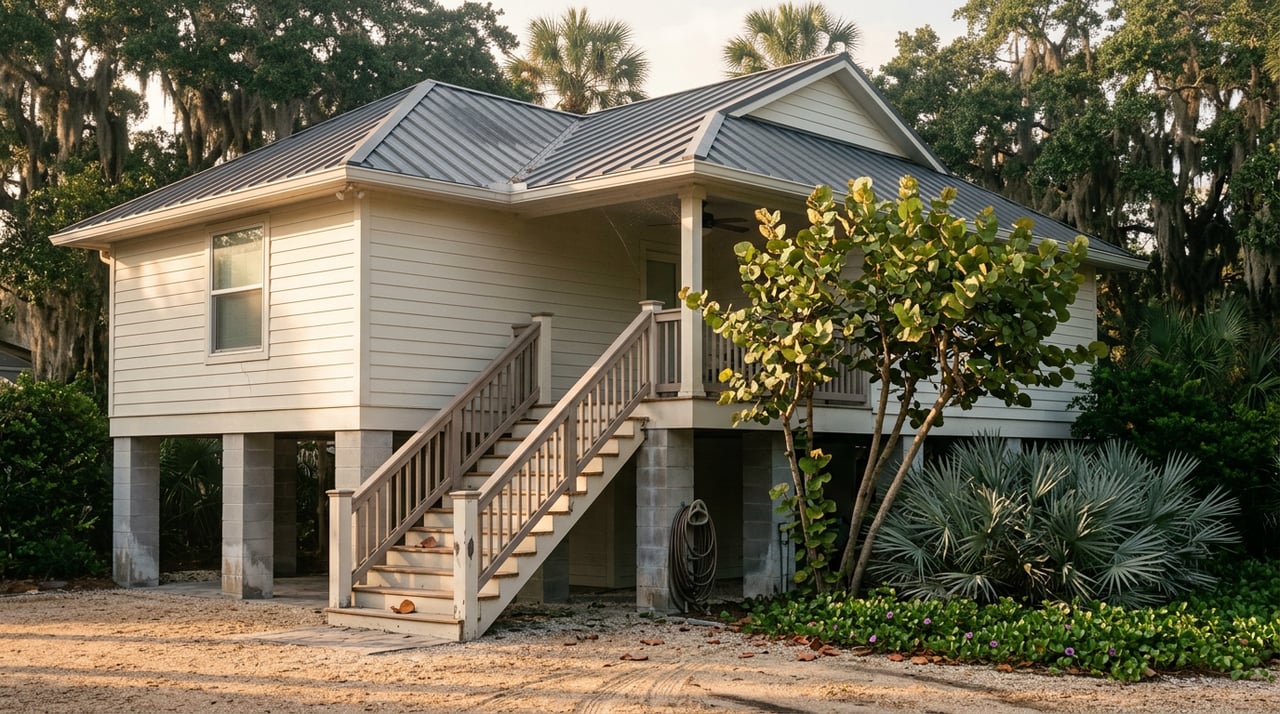
Two cottages on the same stretch of Manasota Key, both marked "storm damaged," both priced within a few thousand dollars of each other. One will be back on its slab with new drywall by next hurricane season. The other has to come down to the pilings, and everything above them, before anyone moves back in.
The list price won't tell you which one you're looking at. The damage percentage will.
The Number Nobody Puts in the Listing Description
Charlotte County's building code has a hard line at 51 percent. If the cost to repair storm damage comes in under half the structure's value, the county treats it as a standard repair permit. Cross that line, and state and federal flood rules take over completely, regardless of what the local zoning code says. Commissioner Chris Constance made this point plainly during the county's November 2024 vote on the issue: once a home crosses that threshold, FEMA, the Florida Department of Environmental Protection, and the state building code dictate the outcome, and the county has no discretion to soften it.
That single number is doing more to shape what you can buy on the Key right now than the Gulf view, the lot size, or the year built. It decides whether a buyer is looking at a repair or a full-scale rebuild, and those two paths carry different costs, different timelines, and different final heights.
Why Charlotte County Rewrote the Rulebook
Hurricanes Helene and Milton hit Manasota Key back to back in the fall of 2024. By the county's count, 760 properties on the Charlotte County side of the Key took damage, and 79 were destroyed outright. Jie Shao, the county's principal planner, told commissioners that of those 760, 585 had no homestead exemption and 175 did, a split that says a lot about how much of the Key's housing stock is second homes and rental property rather than full-time residences.
The rule book behind all of this is the Manasota and Sandpiper Key Zoning District Overlay, which governs the Charlotte County portion of Manasota Key along with neighboring Sandpiper Key. It had been in place since 2005 and was last revised in 2015. It was written for a slower pace of change than 760 damaged properties all needing permits at once. Building Official Shaun Cullinan told the Planning and Zoning Board in November 2024 that the county was fielding a steady stream of resident emails asking what they were allowed to rebuild, and that under the code as it stood, the answer was often no.
The fix the county landed on tied maximum building height to flood zone. Homes in AE and X zones get 5 feet of resilient freeboard, the clearance built in under the first floor, on top of the existing 38-foot height limit, bringing the total to 43 feet. Homes in VE, Coastal A, and Seaward zones, the areas most exposed to wave action, get 7 feet of freeboard, for a total of 45 feet. Setbacks came down too. Side yard requirements dropped from 10 feet to 7.5 feet on interior lots, and the required landscape buffer strip shrank from 10 feet to 5 feet, both changes meant to give owners on the Key's smaller, older lots room to build up without needing a variance.
The Planning and Zoning Board approved the changes 4-1 on November 18, 2024, with Doug Izzo casting the dissenting vote. Residents pushed back hard in between the two votes. Damian Ochab, president of the South Manasota Sandpiper Key Association, collected more than 680 signed petitions opposing the changes, arguing the county was rewriting rules that had nothing to do with the emergency at hand. Tina Bernd-Cohen, a consultant who had worked on the original overlay code, asked the board to preserve the existing two-story-above-garage limit for single-family homes. The county kept that cap in the final version, along with an explicit ban on high-rises in every zone on the Key.
The Board of County Commissioners approved the final ordinance unanimously on November 26, 2024. Commissioner Bill Truex, who works as a builder, didn't pretend the change was cosmetic.
"The 'cottage look' is gone."
Truex also pointed out that many of the Key's older homes, some built in the 1970s on slabs with little more than a crawl space, simply can't be elevated in place. For those owners, the only path to compliance is tearing down and starting over.
What "Under 51%" and "Over 51%" Actually Mean for a Buyer
| Under 51% damage | Over 51% damage | |
|---|---|---|
| Permit path | Standard repair permit through the county | Full compliance with current FEMA, DEP, and state flood code |
| Elevation requirement | None triggered by damage alone | Mandatory freeboard: 5 ft in AE/X zones, 7 ft in VE/Coastal A/Seaward zones |
| Resulting max height | Existing 38-foot limit | 43 feet (AE/X) or 45 feet (VE/Coastal A/Seaward) |
| Typical scope | Repair or renovate existing structure | Often a full teardown and rebuild, especially for older slab construction |
| Timeline | Faster, closer to a normal renovation schedule | Longer, involves engineering, elevation certificates, and a new foundation system |
A listing described as "storm damaged" or sold "as-is" could sit on either side of that line. The seller's disclosure and permit file, not the photos, are what tell you which one you're buying.
What to Actually Check Before You Write an Offer
If you're comparing storm-damaged or as-is listings on the Key, a few pieces of paperwork matter more than the listing description:
- Ask whether the property has a documented substantial damage determination, and if so, what percentage it came in at.
- Pull the elevation certificate through Charlotte County's Building Construction Division. It shows the lowest floor elevation compared to the base flood elevation, and that gap is what your flood insurer will price against.
- Confirm which flood zone the parcel sits in. AE and X carry a 5-foot freeboard requirement if the home crosses the 51% line. VE, Coastal A, and Seaward carry 7 feet, a difference that changes both construction cost and final roofline.
- Review the permit history. A home already elevated or substantially rebuilt since 2024 has likely already absorbed these costs. One still waiting on permits has that work ahead of it.
None of this is guesswork the county keeps to itself. The floodplain management data is public, and a licensed surveyor can confirm current elevation before you're locked into a contract. Every foot a structure sits above its base flood elevation also tends to lower the annual flood insurance premium, so the elevation certificate isn't just a compliance document. It's a cost projection.
The Other Clock: The Beach Itself
Individual rebuilds run on the timeline above, but the shoreline they sit behind is on a separate schedule entirely. Charlotte County has scheduled its second full-scale beach renourishment project for Manasota Key, with construction estimated to begin November 23, 2026, and wrap by April 30, 2027. Coastal Engineering Consultants Inc. is the design engineer on the project, and it addresses erosion from a run of storms going back to Hurricane Ian: Ian, Nicole, Idalia, Debby, Helene, and Milton all took a toll on the dune line. The county has said the schedule is still an estimate and could shift with permitting and weather.
That project won't change whether any individual house needs to elevate. It's a separate piece of the Key's recovery, running on its own calendar, and worth knowing about if you're weighing how exposed a particular lot is to future storm surge.
A Few Direct Questions
Does the 51% threshold reset if a previous owner already did repair work? Charlotte County calculates substantial damage and substantial improvement separately, and it's possible to be over the line on one and not the other. If you're buying a home with recent permit history, ask the county's floodplain office how prior work factors into the current determination for that specific address.
Do condos on the Key follow the same rule? The freeboard and height requirements apply within the zoning overlay regardless of whether a structure is single-family or multifamily, though multifamily and commercial buildings have a separate three-story-above-parking cap rather than the two-story limit that applies to single-family homes.
Is the new code final, or could it change again? The ordinance passed unanimously in November 2024 and is the governing code as of today. Zoning changes on the Key have happened roughly once a decade, in 2005, 2015, and 2024, so it's reasonable to expect it to hold for a while, but always confirm current requirements with the county before finalizing renovation plans.
A storm-damaged listing on Manasota Key isn't a mystery you have to solve alone. The damage percentage, the flood zone, and the permit file are all documented and available before you make an offer. If you're weighing one of these properties against a straightforward resale elsewhere in Southwest Florida, or you just want someone who can read that paperwork with you before you get attached to a view, the team at Creighton Reyes Group has spent years walking buyers through exactly this kind of decision. Reach out and we'll help you figure out which house you're actually looking at.