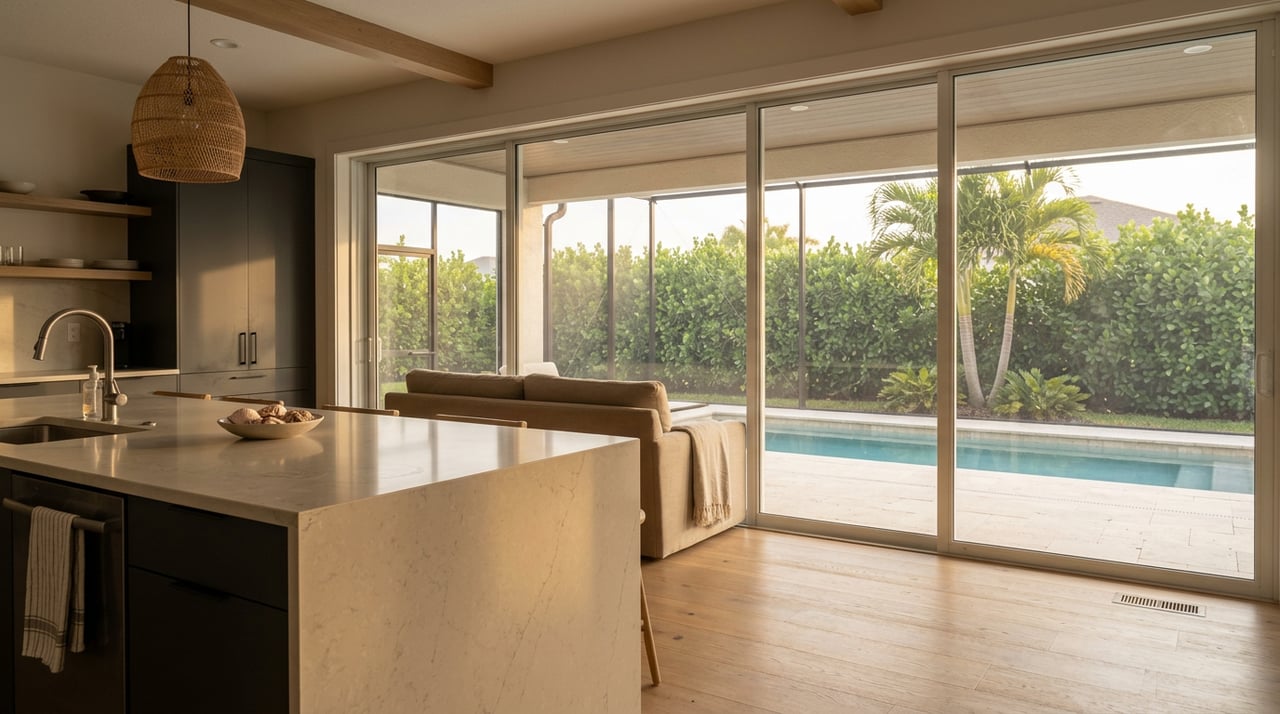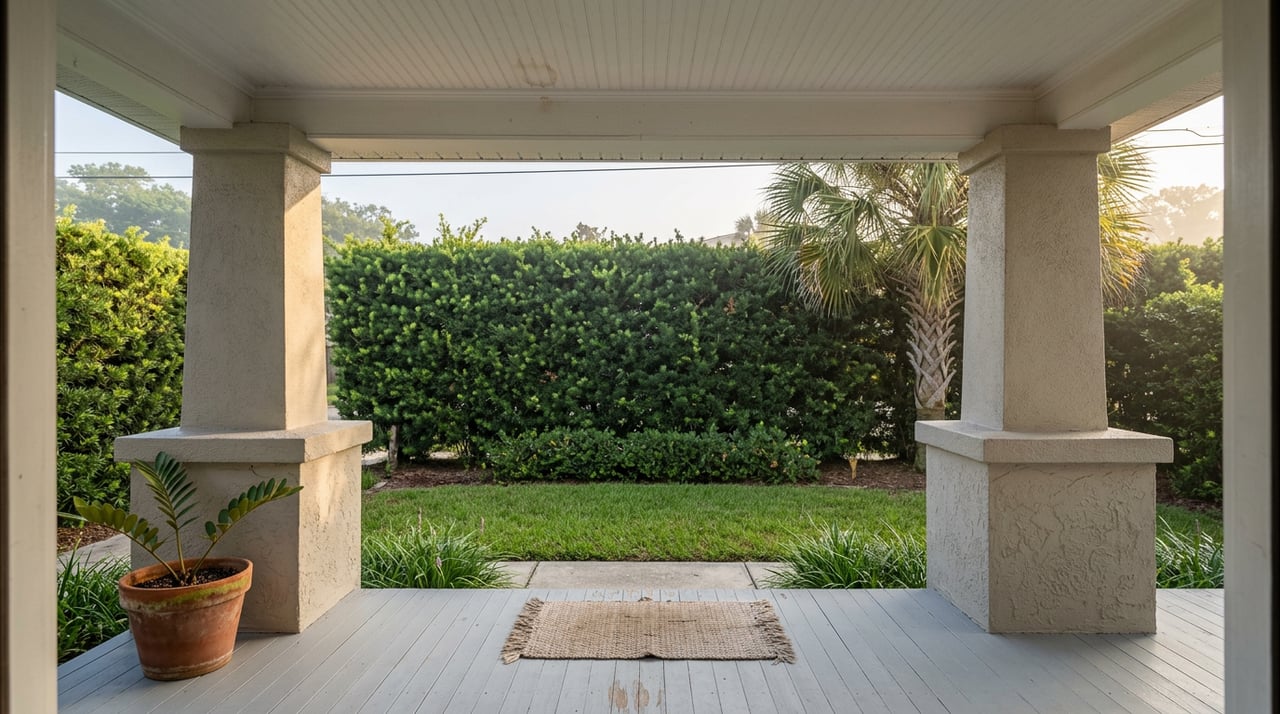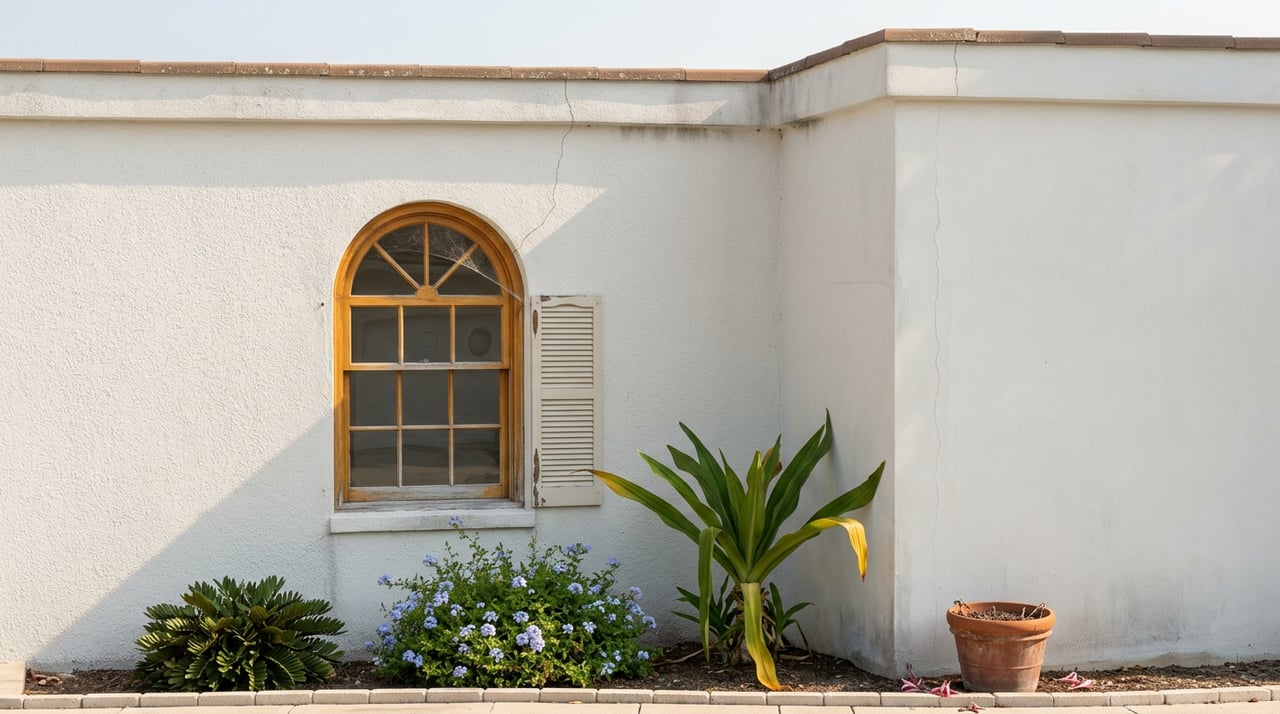
"When you put those windows in, it ain't going to be square."
That's what Architectural Review Board member Jon Steketee told a Venice homeowner earlier this year, warning that a 1920s house has usually settled enough that new windows won't sit as cleanly as the old ones did. He wasn't being difficult. He was describing what buying an older home on Venice Island actually involves once you get past the listing photos.
Here's the part most buyers miss: that comment came during a hearing for a Certificate of Architectural Compliance, a review only about 100 homes in the city currently need. Meanwhile, a separate city-commissioned survey has spent the last two years finding hundreds more homes worth documenting as historically significant, whether or not they sit inside a regulated district. Those two facts don't line up the way most people assume, and the gap between them is exactly what a buyer or seller needs to understand before writing an offer on an older Venice home.
"Historic" Means at Least Three Different Things Here
Ask five people in Venice what makes a house historic and you'll get five different answers, because the city itself is currently running three separate systems at once.
Documented, but not regulated
In 2024, architectural historian Holly Baker of Chronicle Heritage Inc. led a survey that identified nearly 200 new historic buildings in the Gulf View section, which covers most of the core of the island around downtown. On June 11, 2026, Baker presented the second phase of that same survey to the Historic and Architectural Preservation Board: 143 more historic resources, this time in the Edgewood and Seaboard districts. As Baker put it to the board, you can't protect what you don't know you have.
Being on this survey list means a house has been formally recognized as historically or architecturally significant. It does not, by itself, mean the owner needs city approval to repaint it, replace a window, or tear down a rear addition.
Regulated: the Architectural Control Districts
That approval requirement belongs to a much smaller, older system. Close to 100 structures built in 1929 or earlier sit inside Venice's two Architectural Control Districts, per city planning records, 81 in the Historic Venice District and 19 in the Venetian Theme District, both traced back to city planner John Nolen's Northern Italian Renaissance vision for the city between 1926 and 1929. Any exterior alteration on these properties, new construction, additions, color changes, needs a Certificate of Architectural Compliance from the Architectural Review Board before a contractor can pull a permit.
Registered: the opt-in list with financial upside
A third and separate track is the city's Local Register of Historical Resources. This one isn't tied to district boundaries at all. A property from any era can qualify if it has real cultural, architectural, or historical merit, and once it's on the register, owners gain benefits nobody else in Venice can access: a 10-year ad valorem tax exemption on qualified improvements, and the ability to restore a property in a floodplain even when the repair cost exceeds 50% of the assessed value, something FEMA's National Flood Insurance Program otherwise prohibits for unregistered homes. The tradeoff is that any addition, alteration, restoration, or demolition on a registered property also faces additional review.
Three systems, three very different obligations, and a homeowner can be in one, two, or all three without realizing it.
| Tier | What puts you in it | What it requires | What it's worth |
|---|---|---|---|
| Surveyed | CHI's structural survey (Gulf View 2024, Edgewood and Seaboard 2026) | Nothing, yet | Documentation only |
| Regulated (ACD) | Built by 1929, inside the Historic Venice or Venetian Theme district boundary | Certificate of Architectural Compliance for exterior work | Neighborhood character protection |
| Registered | Voluntary application to the Local Register | Additional review on any alteration | 10-year tax exemption, floodplain rebuild exception past 50% rule |
What the Board Actually Argues About
The Steketee quote at the top came from an April 2026 hearing over a home at 417 Nassau St. S., owned by Samuel and Amma Mclean Joynson. Working with architect Sam Hardie of Beebe Design Studio, they wanted to remove a rear addition, build a new one, replace windows and exterior doors, repair stucco, and repaint the original 1920s structure. The board approved the Certificate of Architectural Compliance 6-0, with Chair Mark Beebe recusing himself because his office was doing the design work. But the conversation before that vote is the part worth understanding.
Board member Jon Barrick wanted the new windows sized to match the originals and suggested smooth stucco on the new addition to visually contrast with the stippled stucco on the historic portion of the house, a detail meant to keep the old and new legible as separate eras rather than blending them together. When the Joynsons asked for flexibility on their color scheme, the board held the line on the city's actual code: the principal color can cover no more than 75% of the exterior, a second color up to 20%, and a third accent color up to 5%. That math isn't a guideline. It's the rule the board applies house by house.
Down the street, a mixed-use building proposed for 256 Nokomis Ave. S. needed two rounds of revisions across three separate hearings before its south elevation had, in the board's own language, enough variation and depth to earn approval. The vote in November 2025 was unanimous, but it took months of back-and-forth to get there. If you're budgeting a renovation timeline for a historic Venice property, that's the number to plan around, not weeks, months.
The Line That's Still Moving
None of this is static. In 2022, the city's Planning Commission debated draft land-use regulations that would merge the Architectural Review Board and the Historic Preservation Board into one entity, and while they were at it, close a gap: some properties inside the two existing districts technically didn't need a Certificate of Architectural Compliance for renovation or demolition. Commissioner Shaun Graser argued against adding new restrictions to properties that had operated without them for years. The commission voted 4-3 to require the certificate anyway, with Commissioners Richard Hale and Richard Lawson siding with Graser.
A separate, bigger question came up in that same meeting and went nowhere near a vote: whether to extend CAC requirements beyond the two small districts to the entire John Nolen Historic District as defined in the comprehensive plan, more than 1,700 structures, including most of Edgewood. That idea was, in Graser's words, a huge sticking point, and the record shows the commission expected to revisit it more than once before finalizing anything.
That debate never fully closed. What has happened since is the survey work: nearly 200 Gulf View properties documented in 2024, another 143 in Edgewood and Seaboard as of this June. The regulatory perimeter hasn't officially expanded to match the documentation, but the two are clearly moving in the same direction. A buyer closing on an Edgewood home today isn't purchasing a house that needs a Certificate of Architectural Compliance. They may be purchasing one the city has just finished writing up.
The Upside Almost Nobody Asks About
Most conversations about historic status in Venice focus on restriction. The Local Register benefits get skipped entirely, and they're the part worth raising with a seller or a lender before you assume an older home is more trouble than it's worth. The 10-year tax exemption applies to qualified improvements, not just to owning the house. And the floodplain rebuild exception matters more than it sounds: on a property that isn't register-listed, a storm-damaged home valued near or above the 50% substantial-improvement threshold can be legally blocked from full repair under standard NFIP rules. A Local Register home doesn't face that ceiling. On Venice Island, where elevation and flood zone status vary block by block, that's not a minor detail for anyone weighing an older canal-adjacent property.
Before You Write the Offer
- Call the Building Department at 941-486-2626 and ask staff to check the parcel against the city's Architectural Districts map. Don't rely on the listing description.
- Ask directly whether the address appeared in either phase of the Chronicle Heritage survey. Documentation status isn't always visible from the street.
- If the home is in a flood zone, ask whether it's Local Register eligible before you assume storm repairs would be capped at 50% of assessed value.
- If any exterior work is planned, budget for a CAC timeline measured in months, using the Nokomis Avenue case as a realistic baseline rather than the exception.
- Loop in someone who understands construction sequencing on older homes before finalizing a renovation budget. Our own Daniel Reyes brings that kind of hands-on perspective to buyers looking at fixer-uppers or additions on the island.
A Few Direct Questions
Does being on the Chronicle Heritage survey mean my house needs a Certificate of Architectural Compliance? Not automatically. The survey documents historical significance. The CAC requirement is tied specifically to the roughly 100 properties inside the Historic Venice and Venetian Theme Architectural Control Districts.
Can I paint a historic Venice home any color I want? Only if it falls outside both Architectural Control Districts. Inside them, the city caps your principal color at 75% of the exterior, a second color at 20%, and an accent color at 5%.
Is Local Register status the same as being in the Historic District? No. A property can be Local Register-eligible without sitting inside either Architectural Control District, and vice versa. They're separate systems with separate applications, separate reviews, and in the register's case, separate financial incentives.
If you're weighing an older home on Venice Island, whether it's a fixer-upper in Edgewood or a landmark on West Venice Avenue, the smartest move is figuring out which of these systems actually applies before you fall in love with the floor plan. Our Venice neighborhood guide covers the broader market, and our buyer's guide walks through due diligence steps like these in more depth. If you're on the selling side and want to understand how historic status affects marketing and pricing, our seller's guide is a good next stop.
Either way, Traci Creighton and the team would rather walk you through the district maps and the CAC process before you're under contract than after. Contact us and we'll help you figure out exactly what you'd be buying.